June 7, 2011 arrival to the morning of June 12, 2011 looks something like this in Google directions →
Sofia to Madzharovo. The first travel day was
Sofia to Trigrad.
On the 7th, Tom Heatley, also from Michigan, and I were the first to arrive on a flight from Munich. We were met by American Yoav Chudnoff, president of Phildadelphia-based FofBSPB, and Mladen Vasilev from Shumen, Bulgaria, our field guide for the next twelve days, in the airport lobby. We waited at the airport for another flight from London to arrive carrying Doug Wood and Bill Shepherd. With a couple of hours to spare before the arrival, from Budapest, of Bob and Carli Traverso, we walked around a pond and wetland park adjacent to the airport. Another birder, Carol Thompson from Texas, had arrived a day earlier and was exploring Sofia.
It was hazy, sunny and warm with a mild-to-moderate breeze. It felt good to be walking and moving my legs. Amongst other birds here we heard our first, of many heard, Golden Oriole (
Oriolus oriolus), a bird which proved surprisingly difficult to actually see. Great Reed Warblers (
Acrocephalus arundinaceus) sang from the [phragmite] reeds and we had good looks at a few. Parts of their vocalizations reminded me of our Yellow-breast Chat (
Icteria virens). For this reason, it was an easy bird to identify for the rest of the trip. Accordingly, in the presence of reed warblers, Common Cuckoos (
Cuculus canorus) also called from areas around the pond. Reed Warbler is a favored bird for the cuckoo's nest parasitism. An excellent New York Times article from June 1, 2010 by Olivia Judson titled
Cuckoo! Cuckoo! is linked here and well worth a look. Possibly the best bird for me on this walk was a brief, but clear and satisfying, look at a
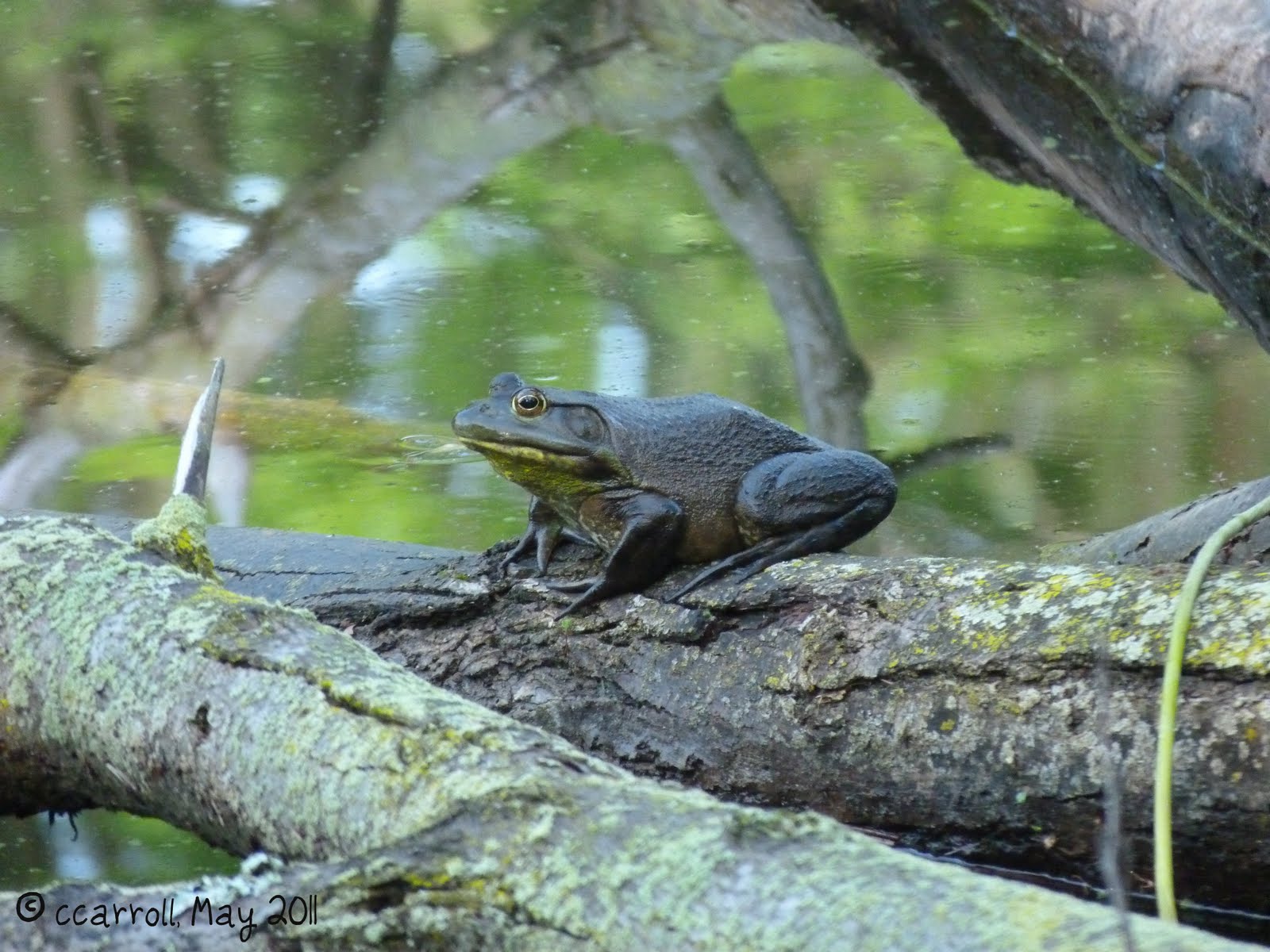
Little Bittern (Ixobrychus minutus) flying across the pond. For the rest of the trip, we would see two other Little Bitterns in exactly the same way, flying across a body of water. Being a warm afternoon it was not all that birdy and while standing on a small bridge looking at a marsh frog (
Pelophylax ridibundus), Mladen suddenly called out "
Alpine Swifts" (
Tachymarptis melba or
Apus melba)! We expected to see these birds in other locations, but they seemed unlikely here. As it turned out we would see Alpine Swifts many times, but this would be our closest and lowest look.
Bob and Carli Traverso arrived and we headed to
Hotel Edi in a suburb of Sofia. I wanted to collapse but knew this would be disaster. Hoping for a good night's sleep, it would be better to remain awake until a normal bedtime in my new time zone.
So we hung out in front of the hotel drinking beer and watching a male and female Grey Wagtail (Moticilla cinerea) perch, sing and call out. The wagtail was such a performer with it tail wagging and warning calls that I thought this might be my new favorite bird. Bill Shepherd assured me that this would not be so and he was right about that.
We left the wagtail and walked around some streets of the neighborhood. I saw the Jay (Garrulus glandarius) above fly in and perch over a rushing creek where it stopped to preen and gave me a moment to snap a couple of photos. The Robin (Erithacus rubecula) stopped for even less time, but it was enough for me to get off this quick photo.
Back at the hotel, dinner was served in the hotel restaurant. I don't recall the main course, but dinner started with a glorious cucumber and tomato salad topped with shredded, white Bulgarian cheese. The cucumbers were crisp, the tomatoes flavorful and the Bulgarian cheese was sharp and pungent. It was so good! We were joined for dinner by Dancho Kristov, the fellow working on the
Strandje habitat restoration, who spoke about how the money raised from our trip participation benefitted the research efforts of this project. That's Dancho, the star birder in the 3:20 minute video, which I do recommended watching.
Though, of late, I've become a dreadful sleeper, collapsing into bed that first night felt great and I do believe I actually slept. Good thing, too. For the remainder of this trip would be go, go, go and do, do, do. My kind of trip.
First stop on Wednesday, June 8th was not far up to a off-season ski resort to look particularly for Nutcracker and both firecrests. I was stunned when I saw what a Nutcracker (
Nucifraga caryocacatactes) looked like - big and crowlike. Secondary to living on a ski resort, I think these birds had become habituated to humans. Later when we were eating lunch at a picnic table, one of the birds began to beg and swooped in for a piece of dropped bread.
While we were eating lunch this Ringed Ouzel (
Turdus torquatus alpestris) appeared. It was very close and confiding and the cameras fired away. We were also successful with both firecrests, two birds that are surprisingly difficult to see although their behavior is like that of our kinglets.
The ski resort also proved to be a great butterfly spot but more about this later.
After lunch we began the long drive to Trigrad in the Rhodopes Mountains where we would stay for our second night. This was a beautiful drive that took all afternoon traveling though villages, a wine- making region, mountains and alongside a beautiful reservoir.
En route we stopped for ice cream and I spotted this amazing White Stork (
Ciconia ciconia) nest built atop a tall chimney stack. Even though this is a distant photo, I love it for the action of the adult bird flying in. The nest contained at least three nestlings. White Stork nests are so large that House Sparrows (
Passer domesticus) and Spanish Sparrows (Passer hispaniolensis) take advantage of this and build their nests in the underbody of the stork's nest material.
In open grape-growing countryside, Bill Shepherd called out this bird perched on a utility wire and I was able to snap a few shots from the open window of our van. The Roller (Coracias garrulus) is spectacular, especially in flight. This photo does not reveal the bird's true beauty, but the Roller is a bird that flushes early and is not easy to photograph with a camera like mine, so I was very pleased with this shot.
In the evening we finally arrived in Trigrad and checked into the
Tribria Hotel. We had time to walk around a bit before dinner and this area turned out to have the only Serins (
Serinus serinus) that we would see on the trip. The hotel owners had also been to the United States and their daughter and grandchildren still lived in Los Angeles. Carli Traverso, also of California, and the wife had a lot to talk about.
With a fast moving river across the road from the hotel, this area was also our best stop for White-fronted Dippers (
Cinclus cinclus). I missed seeing one well on the evening of our arrival, but I awoke early and before breakfast the next morning, I saw this juvenile. I never did see an adult bird well but I can blame that on my own impatience.
After breakfast we loaded up and moved on to our next stop - Trigrad Gorge - for a very special bird.
Още, за да се!
Butterflies found during this time: